
54Kvets Turn to Media as Major Star Act Questions Go Unanswered
Sep 29, 2026
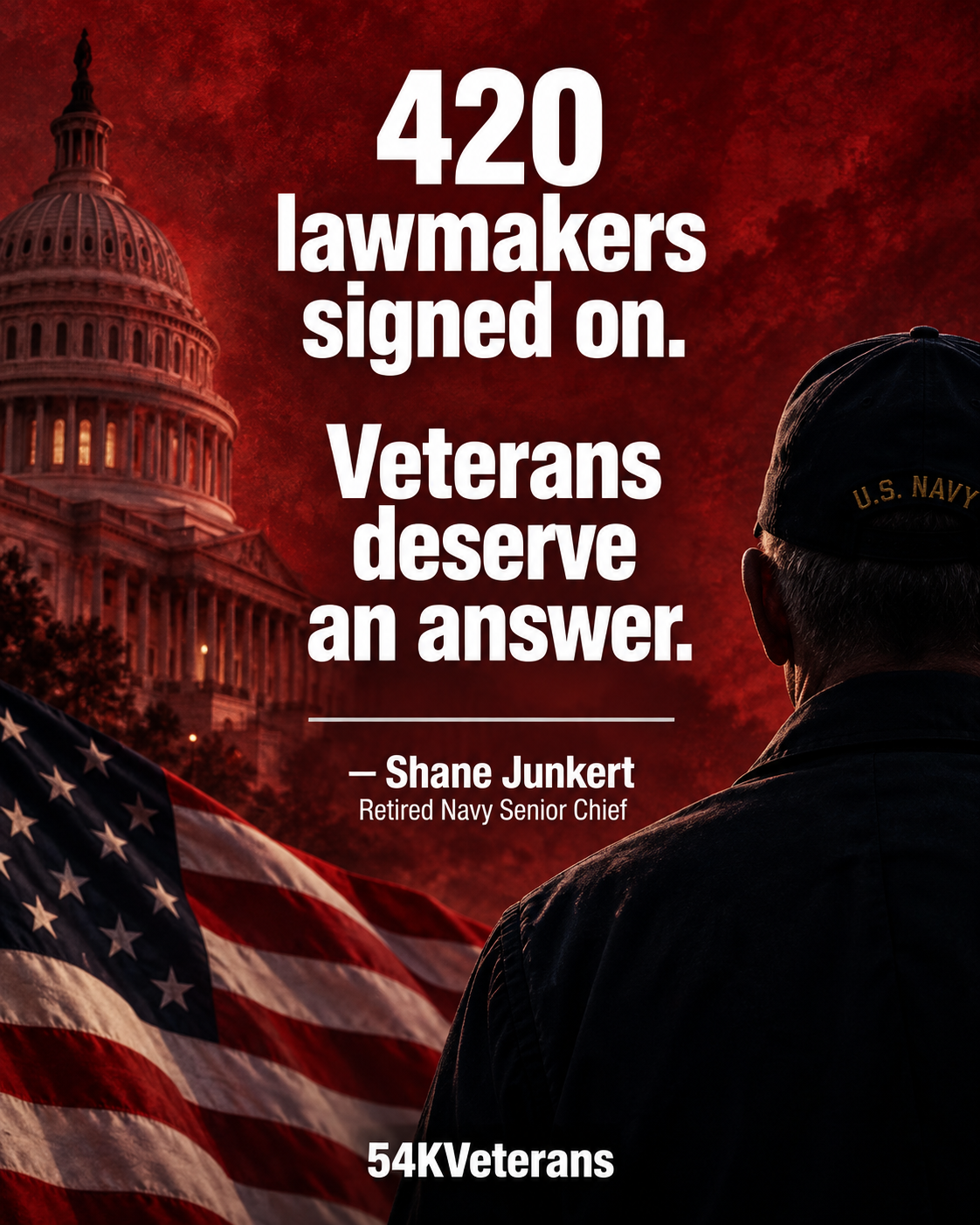
Since Sept. 17, veterans and military families have put Major Richard Star Act questions before congressional staff and newsrooms more than 115,000 times
Washington, D.C, District of Columbia Sep 28, 2026 (Issuewire.com) - Combat-injured veterans and military families are changing tactics in the fight over the Major Richard Star Act.
A national campaign launched September 17 is now putting the same unresolved questions before Congress and the press, asking reporters to determine where lawmakers stand and whether they will answer on the record.
In 12 days, campaign emails have reached congressional staff addresses 50,000 times and media addresses 65,284 times, spanning approximately 477 news outlets and stations.
The fight centers on medically retired service members whose careers ended before 20 years. Under current law, VA disability compensation can offset military retired pay, preventing many qualifying Chapter 61 combat-injured retirees from receiving both in full.
In a March 23, 2026 cost estimate, the Congressional Budget Office said H.R. 2102 would eliminate that disability offset for qualifying combat-injured Chapter 61 retirees and increase total compensation for nearly 59,000 affected retirees by about $1,450 per month on average.
Shane Junkert, a retired Navy Senior Chief, Chapter 61 combat-injured veteran and one of those retirees, organized the effort.
"Republican leaders keep presenting the Take Care of America's Veterans Act (TCAVA) as the only viable path forward. Then explain the math to us," Junkert said. "The standalone Major Richard Star Act has 420 bipartisan cosponsors across the House and Senate. TCAVA has 37 cosponsors, all Republicans. If those lawmakers no longer support the bill they signed onto, tell us who changed their position and why. If they still support it, then explain why veterans are being told a different bill with different language is the only path."
A September 16 release from the House Committee on Veterans' Affairs reported 340 House cosponsors and 80 Senate cosponsors for the Major Richard Star Act and confirmed that the discharge petition tied to H.R. 2102 reached the required 218 signatures on September 15.
Veterans are asking why H.R. 2102 was not addressed through another procedure before the House left Washington.
They are also asking why Rep. Victoria Spartz introduced the Combat Veterans Retirement Restoration Act, H.R. 10463, on September 16 -- one day after the discharge petition reached 218.
And if another funding proposal is now being discussed, veterans are asking who is sponsoring it, how it works, whether it preserves H.R. 2102 as written and where the legislative text is.
The difference between the proposals is significant.
H.R. 2102 would eliminate the offset for qualifying combat-injured retirees -- ending what veterans have long called the Wounded Warrior Tax.
TCAVA Section 101 and Spartz's H.R. 10463 instead use a "lesser of" formula that can leave some retirees with less than the full retirement restoration provided under H.R. 2102.
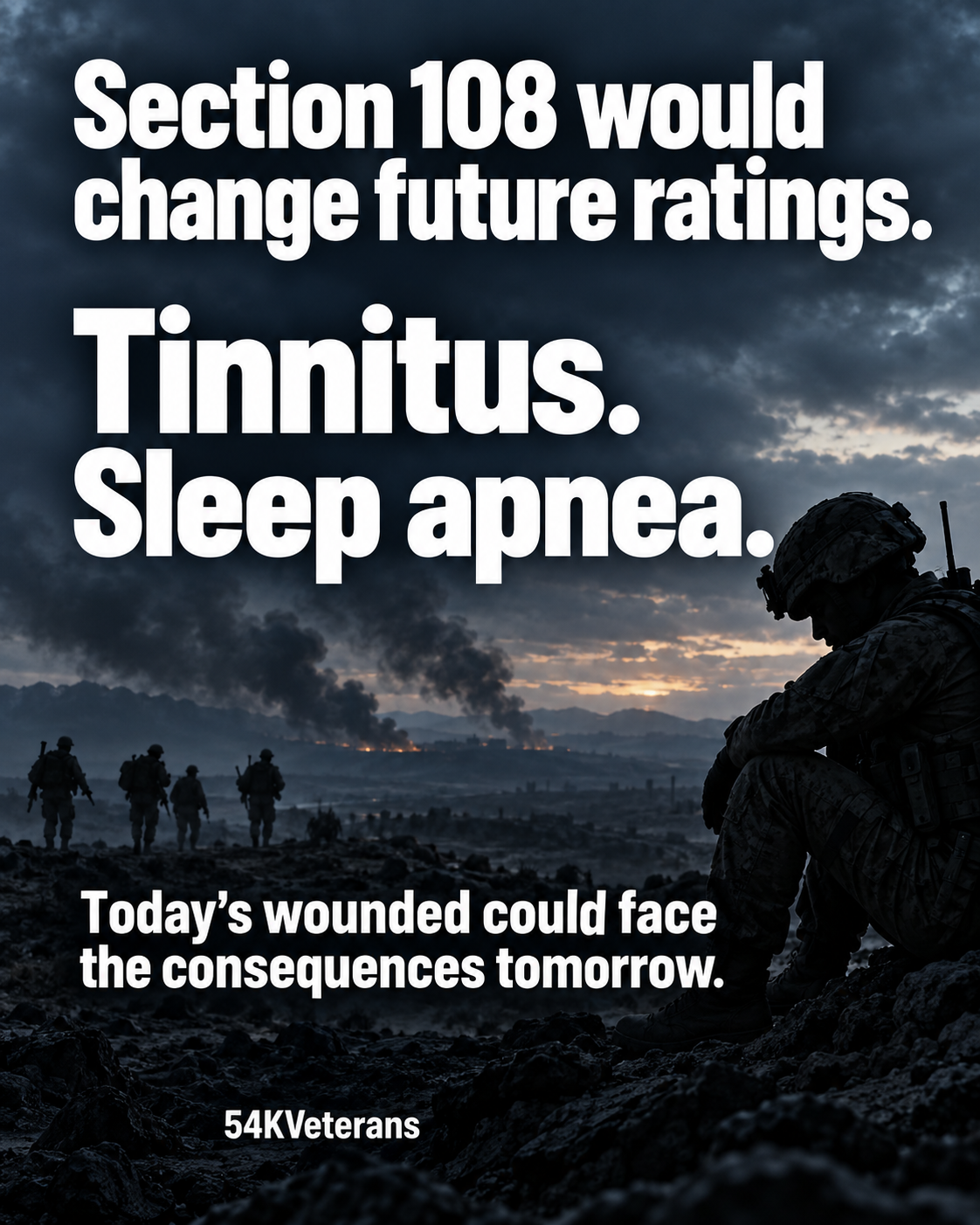
TCAVA also contains Section 108, which major veterans organizations have opposed because of its effect on future VA disability claims involving sleep apnea and tinnitus.
On June 11, 2026, the Veterans of Foreign Wars warned that Section 108 could reduce future disability compensation for those conditions. On September 10, Disabled American Veterans again called for Section 108 to be removed.
Under the June 10 introduced text of H.R. 9237, future sleep-apnea ratings would depend heavily on treatment effectiveness. Some treated cases could receive 0% or 10%, while the current VA schedule can award 50% when a breathing-assistance device such as CPAP is required. Section 108 would also generally eliminate a separate compensable tinnitus rating for future claims.
The concern is not theoretical.
Stars and Stripes reported July 29, 2026, citing the Pentagon and U.S. Central Command, that a majority of the more than 600 U.S. service members wounded at that point in the Iran war had suffered traumatic brain injuries. On September 11, Stars and Stripes reported that the number wounded had climbed above 800, citing the latest Pentagon statistics.
Those injuries are directly relevant to the conditions addressed by Section 108.
VA Research reported in 2019 that a VA San Diego Healthcare System study of 2,600 Marines found traumatic brain injury -- particularly blast-related TBI -- was linked to worsening tinnitus. A study published in the March-April 2016 Journal of Head Trauma Rehabilitation, involving researchers from James A. Haley Veterans' Hospital, examined 86 consecutive brain-injury rehabilitation admissions and diagnosed sleep apnea in 49%.
For veterans following TCAVA, that raises a direct question: What benefits will be available when service members being wounded today eventually leave the military and file claims of their own?
Those questions will still be waiting when Congress returns November 9 -- two days before Veterans Day.
"Congress comes back November 9, two days before Veterans Day. I'm one of the roughly 59,000 combat-injured retirees this fight is about," Junkert said. "Members can attend every parade and give every Veterans Day speech they want, but 420 lawmakers have already put their names on the standalone Major Richard Star Act. The question is whether Congress will actually honor that commitment and pass the clean bill veterans have been fighting for."
The 54Kveterans campaign is asking newsrooms to put these questions directly to congressional offices and report what lawmakers say -- or whether they provide a substantive answer.
For more information about this campaign readers are encouraged to follow 54kveterans on Facebook.


Media Contact
54kveterans (54kvets)
817-771-3577
489 Army Drive box 24130
Source :54kveterans
This article was originally published by IssueWire. Read the original article here.
More News










Recommended





How Trump Has Disrupted National Parks

YOUR NEWS, OUR NETWORK.
Do you have Great News you want to tell the world?
Be it updates about your business or your community, you can make sure that it’s heard by submitting your story to our network reaching hundreds of news sites across 6 verticals.